Author Archives: Claire Hart-Palumbo

Unknown's avatar

About Claire Hart-Palumbo

Former actress and theater director turned technical writer / instructional designer, has signed a three-book deal with Sibylline Press for her cozy mystery series, set in the Houston theater community. Loves Jane Austen, Noel Coward, cozy mysteries, SCBWI, and the beach.

YA Reads for December

My book report for December is over four great Young Adult novels.

Babe in Boyland by Jody Gehrman – Natalie is Dr. Aphrodite, the love guru of the school paper. Unfortunately, she doesn’t have much first-hand knowledge of love and her column is turning into a joke. The boys in her school won’t give her a straight answer about anything, so her solution is to disguise herself as a guy and spend a week at Underwood Academy, an up-scale private boys boarding school.

This is a riff on Shakespeare’s Twelfth Night and could be likened to another take-off on that theme, “She’s the Man.” Just as Viola does in both of those stories, Natalie ends up learning a lot more than she thought she would about guys and girls and how they feel about love, while falling in love with her boarding school roommate. Shakespeare wrote his comedy in 1601, which was revamped as the movie in 2003. Jody Gehrman’s book came out in 2011. Just goes to show what a great story-teller Shakespeare was.

Six Feet Over It by Jennifer Longo – This 2014 YA novel was a VOYA Perfect Tens Pick, an Indies Introduces New Voices Pick, and Best YA Debut of the Year on Bustle.com. Leigh’s father is a would-be real estate speculator who buys a cemetery and moves his artist wife and the chronically depressed teenage curmudgeon Leigh away from the ocean they both love. Leigh longs for her impish best friend and the confidences they shared. To make matters worse, Leigh’s mother keeps disappearing to go back and paint at the beach, her father runs around wheeling and dealing with everything but the business, and both leave her running the cemetery office. Unfortunately, she rarely gets anyone who is interested in buying pre-need. So on a daily basis this emotionally frozen teenager must deal with people in crisis and overcome by tragedy. She hates her life, her parents, and just about everything. Gradually, we learn this is tied directly to a mystery involving her best friend.

The young Hispanic grave-digger, Dario, that comes into her life teaches her a great deal about his philosophy of life, how to love (he’s saving to bring his fiancé to this country) and how to serve people in their darkest moment. When the time comes, she finds “the courage to fight for him and save herself along the way.”

The Absolutely True Diary of a Part-Time Indian by Sherman Alexie (illustrated by Ellen Forney) – Among the many awards this book won in 2007 were the Boston Globe Horn Book Award, Book Sense #1 Pick, NYPL Book for Teens, New York Times Bestseller, Kirkus Review Best YA Book of the Year, Publisher’s Weekly Best Book of the Year, Best Book of the Year for both American Library Association and the New York Public Library. It was also the most widely banned book that year.

This book is about being an Indian (or Native American if you are trying to be politically correct, which Alexie is not) living on a reservation, where he absolutely does not fit in. Junior is an aspiring cartoonist with an assortment of physical and health issues. He has grown up being picked on by everyone except his best friend and defender. But when he makes the decision to find a way to go to the all-white school in a neighboring farm town, he becomes an outsider not only at his new school but a pariah on the reservation and his former best friend becomes his sworn enemy. This is a true-life story of overcoming adversity, finding your own path to your best self, and learning to reconcile that with your family and your culture.

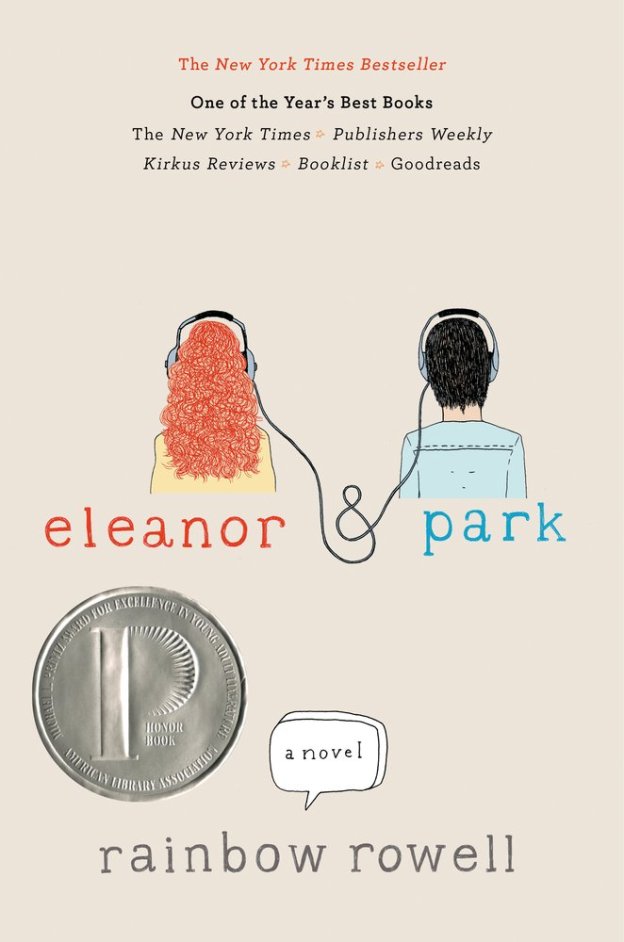
eleanor & park by Rainbow Rowell – This 2013 novel was a Printz Award-winning book. This story also deals with a girl dealing with her parent’s bad decisions and living through terrible harassment and isolation. Eleanor has moved to a new town with her mother, her mother’s boyfriend, and their blended family. The stepfather is a jerk and treats her alternately as a trouble-maker and a possible object of his scorn and lust. She affects a bizarre mode of dress that marks her as a kind of out-there eccentric, but it is because her mother barely has enough money to feed the kids and nothing left over for her school clothes.

Bullied on her first day on the bus, she meets Park who begrudgingly allows her to share his seat. His mother is a savvy and successful Korean hairdresser who is always pushing him to excel. At school he manages to stay on the good side of the popular sharks that roam the hallways while doing his own thing, but he still falls victim to all the usual pre-conceived notions about Asians and mixed-race kids. Eleanor and Park share advanced placement classes and start to become friends and to explore their attraction. His family is different but ‘normal’ by almost any standard. She is gradually integrated into a core loving family who understands part of her family life and accepts her.

Just as they are becoming comfortable with being a couple and in love, her stepfather becomes more violent and threatening. As her living situation reaches critical mass, she plans to run away to her uncle in Minnesota. Park, the most careful driver in the world, offers to drive her—to give her up in order to save her. His father discovers the plan and insists that he take his Dad’s truck. Eleanor insists that he leave her on the doorstep because she doesn’t think she can say goodbye. Her uncle and aunt listen to her horror stories and intervene to rescue Eleanor’s mom and siblings as well.

Park writes to her every day. When she never responds, he stops mailing the letters. Eleanor suffers in her self-imposed silence until finally she writes him a single postcard with the three words he always wanted her to say.

***

Remember, books are great gifts and can make indelible memories.

Middle Grade Reads

Last month I volunteered to do a handful of book reports for our Houston Regional SCBWI meeting. I’m hoping someone else will step up to do picture books as I’m woefully under-read in that area. These were four recommendations that I made to our membership, not all recent, but all delightful.

The Tail of Emily Windsnap by Liz Kessler (illustrations by Sarah Gibb) – Series began with this book in 2003 and continues through 2015. Think Princess Diaries meets Splash with a lot of Ariel.  Emily has never known her father.  She lives on a boat with her mother who oddly enough has taught her to fear the water. She’s never been immersed in water in her life. She takes showers instead of baths. Then, in seventh grade she takes a swim class and learns that after a few minutes in the water she morphs into a mermaid.  It’s a bit terrifying and embarrassing.  She manages to hide her secret by spazzing out and skipping swim class, but starts secretly swimming in the ocean at night while her mother works.  She meets and befriends another adolescent mermaid who reveals another world and community below the sea. They meet secretly because it is apparent that Emily is an illegal mermaid, the product of a marriage between a merman and a human woman.  Eventually she confides in her school friend and the three of them plot to free her father from Neptune’s prison. This is a very successful and slightly Disney-like series.

Crenshaw by Katherine Applegate (author of The One and Only Ivan) – Jackson is a in the 5th grade when the imaginary friend he had as a little kid returns. A giant cat that surfs and carries an umbrella, Crenshaw is about six feet tall but no once else can see him. Think Harvey as a cat. He’s come back, because Jackson needs him. His father is unemployed, his mother is a waitress working extra shifts. Since losing their house, they live in a motel on the brink of homelessness. His parents try to put a good face on things, but Jackson understands all too well what is happening. Crenshaw becomes his confidant and only outlet. He has assumed a lot of responsibility for his baby sister and even his parents’ happiness. He tries to act normal at school to hide this secret. But he’s depressed because he loves his school and his best friend, Marisol and knows that soon they will have to move again. When his father sells their television to Marisol’s father, the ‘cat’ is out of the bag. Once she knows his situation, Jackson imagines her pity and feels humiliated. Eventually, he confides his secret and tells her about Crenshaw as well. He’s fears she will think he’s crazy, instead she says, “Jackson, just enjoy the magic while you can, okay.”

Jackson is planning to run away and relieve the pressure on his parents, he’s even written a note. But he decides against it because his sister needs him. In the end, his parents find the note and realize the pressure he’s been under and that he deserves the truth and their confidence. In the end, their situation is resolved realistically so they can stay together and he can stay in his school. Before he leaves, Crenshaw explains that imaginary friends never really leave. They’re on call and they can come back whenever we need them. This book deals with very real issues in a soft and magical way.

Raymie Nightingale by Kate DiCamillo – Raymie is in middle school when her father runs off with a dental hygienist. She decides that if she wins the Little Miss Central Florida contest that her father will see it on the news and come home. So she signs up for twirling lessons and starts looking for good deeds that she can do to win the contest. Her twirling teacher is an eccentric at best, but she meets two other oddball children in the classes: Louisiana, a tiny southern belle who faints at the drop of a hat and Beverly, who is a bellicose tomboy who comes to class with bruises.  They become an odd but inseparable trio and work through their separate but equally traumatizing abandonment issues. More than anything else this book reminded me of the play The Miss Firecracker Contest by Beth Henley.

Footer Davis Might Be Probably Is Crazy by Susan Vaught – Footer is a middle grader with a bipolar mother who has been in and out of the looney bin a few times. Her mother is home now, but maybe not for long. She’s taken to using a gun to explode snakes in the yard. Footer is more than a little afraid that her mother’s illness is hereditary and that she is going crazy. She’s been dreaming about her mother shooting someone and burning down a building. Then she finds out that two kids from her school were probably killed in a fire and their father was shot.

With her best friend and confidant Peavine, Footer has to work through her mother’s issues and play detective to figure out what happened at the farm and whether her mother killed that family. She discovers her mother’s correspondence with the kids’ father in prison. Eventually, we learn that these other children are alive and have a terrible secret. Their grandfather was abusing them on a regular basis and Footer’s mom was trying to help them get away.

Each of these middle-grade books deals with increasingly real-life situations and tragedies and the coping skills of children.


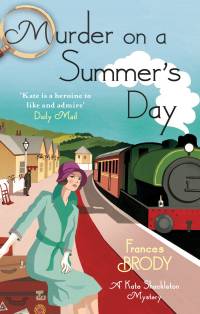
Murder on a Summer’s Day by Frances Brody

The fifth in the Kate Shackleton Mystery series, Murder on a Summer’s Day offers an evocative picture of both post-WWI England and the splendor of the Raj.

Professional female detectives are rare, but this one has made enough of a name for herself that she is brought onto the scene at Bolton Abbey when an errant Maharaja goes missing in Cornwall while making plans to take a beautiful chorus girl as his second wife. It is a potential scandal that the India Office, the Duke of Devonshire, and the government wish handled with discretion. What better person to locate the missing Maharaja and defuse a delicate situation than the distinctly upper class young widow of a war hero.

Unfortunately, Kate finds the vital young Prince after he has been murdered. The India Office and government (both local and Empire) seem bent on hushing it up and calling it a tragic accident. The parade of Indian royalty, the pomp and circumstance,  class distinctions, the excitement of political intrigue, and a missing priceless jewel are all here. Even the hint of a future romance between Kate and a local doctor (and I mean only a hint).

Two cultures are well researched and accurately portrayed. Several historical characters appear, the inspiration for the unsuitable lover was the real-life Folies Bergère dancer Stella Mudge. But somehow the story is not as exciting a romp as I would expect. The plot is full of twists and turns and imminent threat, but even the cobra placed in Kate’s room does not cover the somewhat scattered and disjointed plotlines. The big payoff never seems to come. The villain is insufficiently punished for two murders and multiple attempts, the jewel disappears into a vague Swiss bank, and the only real romance is at third-hand. It is all a little too formal and proper. Personally, I much prefer the impish misadventures of Lady Georgiana in Rhys Bowen’s Her Royal Spyness series. It is equally well researched, but a lot more fun. But then I prefer a little humor mixed into my murder and mayhem.

Sometimes a series is extended a little beyond its natural virtues or takes a dip in the middle. Before discounting this successful series, I would recommend going back and checking out one of the early books, such as Dying in the Wool, A Medal for Murder, Murder in the Afternoon, or A Woman Unknown (shortlisted for the MWA Mary Higgins Clark award).

News of the World, by Paulette Jiles

I came back from two conferences with bags full of books, but this novel was a gift from a friend, and so I moved it to the top of the pile. I’m glad I did. In a year of historic political division and growing national misogyny, on November 16th the National Book Award failed to honor a single nominated woman, but instead focused on divisions along racial lines. So, let me talk about this beguiling and poetic novel written by a woman that deals with race and the position of women in a historical moment defined by rampant violence, tyranny, martial law, huge political and economic differences, government corruption, and the vulnerability of the disenfranchised.

Paulette Jiles lives in Austin, Texas. She is an author who writes lyrically of real events and people fictionalized in a vivid and epic narrative that never loses its sense of the personal and the mundane events of this journey story. The book was one of the worthy nominees for the National Book Award for best novel.

The tale begins in the winter of 1870 in north Texas. The state is still under martial law, the US troops of occupation guard public meetings of any kind. Despite raids from the Indian Territories across the Red River, roving bandits, and sex traffickers, private citizens are prohibited from carrying handguns. Captain Jefferson Kyle Kidd, a 71 year-old veteran of two wars and a survivor of a third, the Civil War, is a former printer plying his trade as a itinerant purveyor of news. He travels from town to town through Reconstruction Texas setting up public events where he reads from Eastern and international newspapers of exotic and romantic places and events, he hopes to broaden his audience’s understanding of the world. He carefully avoids articles about the corrupt and warring political factions in power in Texas.

Into his precarious vagabond life comes a 10-year old girl recently recovered from the Kiowa. Taken when she was six during a raid that killed the rest of her family, her aunt and uncle have offered a $50 gold piece for her return. The negro teamsters transporting her know and trust Kidd and see him as a reliable escort, whereas their conveying a young white girl offers all kinds of complications. Kidd’s sense of honor and the vulnerability of this young wild child persuade him more than the money. From the beginning, the trip is a struggle, fraught with peril and unsavory characters. But the old man’s kindness, the girl’s courage, their shared danger, and their growing interdependency forge a bond between the two.

When at last Kidd delivers her to her remaining family, she has begun to relearn her original language, accepted the necessity of wearing the constrictive white clothing, and begun to feel safe in his company. But the dour German couple he meets are looking for someone to share the labor of their farm, without any consideration for the kindness required to fully reclaim a young girl who will forever consider herself a Kiowa, ripped from her family not once but twice. The ultimate choice of what is right and wrong and what constitutes honor, responsibility, and family is at the heart of this story, brilliantly and mesmerizingly told through the day to day decisions of life and death.

A recurrent theme of the book is evident in the title, News of the World. Kidd began adulthood as a 16-year old courier in the War of 1812. He has continued to bring messages and news of things beyond and outside as a printer and reader. In the epilogue of the story we learn “the Captain asked to be buried with his runner’s badge. He kept it since 1814. He said he had a message to deliver, contents unknown.” How nice it would be to have a Captain Kidd to see us through this current moment in history.

SCBWI Houston Conference – 2016

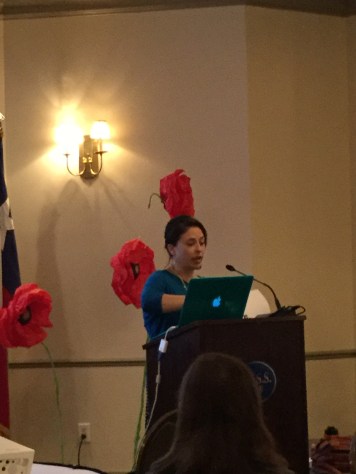
Another great SCBWI conference for the record books on October 22, 2016. A new venue for SCBWI, the Hess Club (5430 Westheimer) was not difficult to find and the parking was free. I missed ducking out to a coffee shop as we did at the Memorial City Marriott in 2014 and 2015, but the food was good, the company congenial, and the speakers were great.

The proceedings opened with our illustrious Regional Advisor, Vicki Sansum and Charles Trevino. Then we were treated to a keynote address by our own Crystal Allen. If you see her ask her to explain ‘genre’, you’ll get a laugh.

A panel discussion included local success stories Lynne Kelly, Joy Preble, Bruce Foster, Kathy Duval, Sherry Garland, Kim Morris, and Sandra Howatt. Each touched on his/her path and the things they learned along the way, and how much SCBWI contributed to that journey. I’m sorry to say I missed part of this presentation for my first of three critiques.

Katherine Jacobs.JPG

Katherine Jacobs


Our first guest speaker was Katherine Jacobs, who is a senior editor at Roaring Brook Press. Her talk was entitled “The Body Electric: Creating Characters that Spark With Life.” She spoke effectively about bringing your characters alive using their physical characteristics and mannerisms, and incorporating active verbs to describe them. She suggested, “If your character seems boring or cliché, it’s because you didn’t go deep enough. Listen to your character.” Contrasting Flat and Round characters, she used specific writers and their work to make her point, recommending being willing to take your characters to a ‘dark place.’ Summing it up, she said, “Your characters are the soul of your work.”

Maria Middleton is the Art Director at Random House Children’s Books and is responsible for the overall look and feel of all their Middle Grade books. As you might expect, she talked about visual storytelling, using slides to illustrate her points to great effect. Like many people, I’m in a great hurry to get published, so it hit home when she said, “Give yourself time to be great.”

Kelly Sonnack (one or my critiquers) compared Story to a journey, where the writer is the travel guide. She encouraged us to see the story as a path, where you leave a series of breadcrumbs. But you must trust the reader to understand and follow those directions. You promise them a destination, and you need to deliver. She also spoke about character and making the reader root for yours. Likeability plays a big part, but even unreliable or less than admirable characters must allow the reader to connect on some level to be successful. Some things she recommended:

  • Look at how you introduce the character.
  • Identify their flaws.
  • Is every character necessary to the story?
  • What does the villain ‘offer’ the protagonist?

She also discussed Plot and examining what the character really wants. This rang true for me, because this is how an actor approaches a character and what he/she does. She gave some very specific recommendations on Voice and Dialog, which feed into each other. Both contributing to Pacing, in that the rhythm and length of your sentences can quicken the pace and build to the climax or completely derail the forward movement.

Susan Dobinick is an editor at Bloomsbury Children’s Books. At her previous publishing job she was one of the editors on Lynne Kelly’s Chained.  She tried to help us understand the difference between the ‘moral’ of the story and the broader themes, or the Big Idea. As an exercise, she had each table work together to write a paragraph for a story using three words suggested by the audience: peach, cloud, and robot.  I think our table’s story was very promising!

Brianne Johnson.JPG

Brianne Johnson


I missed the beginning of Brianne Johnson’s talk about first pages because I was in my second critique. She is a senior agent with Writer’s House. But I don’t think I missed many minutes because what I heard made perfect sense, was very lively and filled with examples. She suggested introducing a mystery or conflict from page one of your manuscript and planting lots of scraps of mystery and conflict as part of character development, tone, setting, and action. “Little mysteries can hook you.”

Ginger Clark was a delightfully spirited and funny speaker. A senior agent at Curtis Brown, Ltd., she is particularly interested in MG and YA historical or fantasy and its world building. We had several things in common, actually:

  • Her love of historical YA and MG fiction, I’m writing an MG novel set in 1965 during integration.
  • She loves Eleanor of Aquitaine, I played her in Lion in Winter.
  • She was in drama and band when she was younger, as was I (and my heroine is a band nerd)
  • She is looking for a manuscript about Queen Boadicea, which she pronounced correctly but I knew how to spell.

Ginger compared writing a historical to packing the luggage for the characters. You have to do the research and know what fills their day and what are their habits, clothing, and environment. She encouraged us to use primary sources. Road trip! She also cautioned that you don’t do a historical just to avoid technology or on a whim; let the setting suit the story.  She used examples from published texts to show how strategic use of period terms or objects can immediately tell the reader what sort of story he/she is reading and when it occurs. “Give us a place name a kid would know—transportation, clothing, are all world-building. Choose wisely.”

The day was rounded out with a First Look panel discussion of selected first pages and art. I’m happy to say they picked my first page as one of the ones to discuss and it got some very favorable and constructive comments.

Finally, award nominees were announced and everyone found out how many of the silent auction items they’d actually won. I bid on everything! Fortunately, I only won three items, but it was great fun.

Of the two out of three critiques I received (the email one is still outstanding), I was lucky to have generally glowing comments from the lovely Crystal Allen and equally encouraging but constructive criticism from Kelly Sonnack. Yea!

The day concluded with a congenial dinner at Los Cucos. Lots of discussion and impressions from the day and generally good fun.  Congrats to the conference planning committee on a job well done.

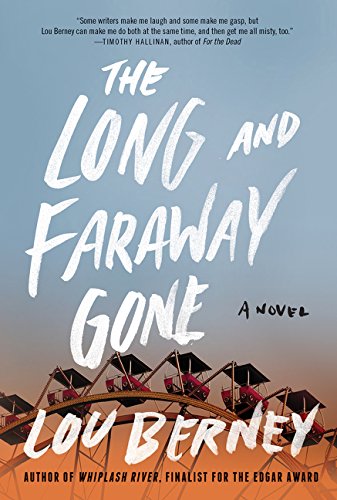
Lou Berney’s Award-Winning Novel

I had already purchased and begun reading Lou Berney’s The Long And Faraway Gone when I left for Bouchercon: Death on the Bayou in New Orleans. So I was not surprised when it won the Anthony Award for Best Original Paperback mystery novel for 2016.

Berney has a hauntingly human and almost casual style, centered around a premise that hooks you from the beginning.  What happens to the teenage survivor of a tragedy?  The book intertwines two barely related tragedies from the 1980s in the characters of the lone survivor of a robbery turned massacre and the younger sister of a missing teen who vanished.

Wyatt wonders why the robbers killed all his co-workers at the movie theater, but left him alive?  Julianna is left forever waiting ‘at the fair’ for her sister Genevieve to come back from an errand that was supposed to take ten minutes.  In both cases, there have been no answers for over twenty-five years.

How do you move forward?  How do you build a life?  Can you ever be close to anyone again, when your closest friends were brutally murdered?  How do you stop putting your own life on hold while you pursue every whisper of a lead that will bring you answers?  What happens when there will never be any closure?

Berney is equally adept at interweaving the past and the present and multiple viewpoints that leave you aching over the near-miss, the misunderstood, the unknowable. All these characters are damaged, a few are despicable, but all are engrossing.  I was haunted by this book for the last several weeks, because like the characters we are left with no neat answers.

For me the message was not in the huge violent tragedy, but the everyday tragedies of people left behind, who can never quite get it together or accept that they can never find the real truth. Because we can never really know what is in someone else’s heart. The miracle is finding the courage to choose love and a purposeful life in spite of that.

The Long and Faraway Gone is published by William Morrow, an imprint of Harper Collins.

Housekeeping Your 401(k)

I usually rebalance my 401(k) investments once a year. This year, doing research for documentation in the financial industry, I picked up a few things you may want to add to your regular financial housecleaning.

The Department of Labor has enacted new guidelines that may wreak havoc in the investment industry in 2017. As we approach year end, it may be worth having a conversation with your broker or benefits coordinator.

All retirement funds have fees attached to them, and I do mean ALL. Some are more obvious than others.  For instance, the conversation you have with your broker may be a line item charge.  But it will be worth it if you come away understanding the following.

Which of the three types of fees are you paying?

  • Plan Administration Fees – general administration costs, charged off the top [to your employer for a 401(k) and often recouped from you].
  • Investment Management Fees – fees specific to the investments you have chosen; some cost more than others, and a few may be exempt.
  • Individual service fees – like the fee to talk to your broker, take a loan on your investments, etc.

Which of the three common fee calculation methods does your plan use?

  • Per capita – this is a fixed dollar amount charged per participant (sometimes for each asset in your portfolio). Everyone pays the same fee, so you’ll always know what to expect. This is great if you are a high end investor. The small investors are paying an inordinately high percentage of their investment in fees.
  • Pro rata – this fee is based on a percentage of your assets. This is to your advantage if you are a low end investor, but if you have all your retirement in this fund, you may be carrying the load for everyone.
  • Hybrid – a combination of fixed dollar and asset based fees. Some combination of the two other methods is used to level the fees so that no one class of investor is unduly burdened.

The pro rata and hybrid methods calculate fees based on basis points (bps), which are a hundredth of a percentage point of the overall investment, i.e., 0.01%. This translates as 100 bps = 1%. Ask your broker to interpret the fees for you.

  • If you pay much more than 100 bps or 1% of your overall investment per year, look closely at the return you are getting on your investment.
  • If you pay more than 200 bps or 2% of your overall investment, look for other investments.

Ideally, your Plan Sponsor [if you have a 401(k) or other retirement plan] and the recordkeeping company (Fidelity, Merrill Lynch, TIAA, etc.) try to manage fees. The Plan Services Expense is paid out of what they internally call the Plan Revenue.  This has less to do with any profits your investments are recouping and more to do with what they have identified as the price of the plan.  The plan aspires to be in balance or revenue neutral.  The price designated meets but does not greatly exceed the actual cost of administering the plan.  This rarely happens as projections are based on known factors, which do not include other people moving out of the fund or the market soaring or taking a hit. So what you need to ask your broker or benefits coordinator is this:

  • In a Revenue Shortfall, how will the shortfall be covered?  Will I be billed?
  • In a Revenue Excess, will the excess be returned to the participants as a Plan Servicing Credit?

If you are participating in an employer-sponsored retirement plan with employer matching up to a certain percentage of your compensation, you may be leaving money on the table. Ask the following:

  • Am I taking full advantage of matching funds?
  • If not, does my employer do a True Up calculation at the end of the plan year?
  • Is the plan year based on the calendar year?
  • What percentage of my pay would I need to take out for the rest of the year to recoup the matching funds I have missed?

For example, if your employer matches your deduction up to 5% of your annual compensation and you only deduct 3% per pay check, you are cheating yourself. The 2% you have given back to your company on your annual income of $100,000 is $2,000.  If you are ten months into the plan year, you have already missed $1,666.67 of matching funds.

But, if your company does a True Up calculation at the end of the plan year, it looks at the total you put in and the total match. If your employer is not meeting the full 5% match, an additional payment is made into your retirement fund. That means, if you up your participation to 10% for the last two months of the plan year, you can make up half of what you gave away.

It breaks out this way, for the first ten months you contributed roughly $250 per month, which was matched 1 to 1. Your plan saw $500 added each month, so at the end of ten months you added $5,000 total. At year end you can expect a total contribution of $6,000. Whereas, if you had put the full 5% in and it was matched 1 to 1 your total contribution would be $10,000 (5% + 5%) for the year.

Changing your deduction to 10% for the last two months will add $1,666.67, but it will only be matched (initially) up to 5% each month, or $833.33. So you add a total of ~$2,500. However, IF your plan does a True Up, it looks at the total amount you contributed: $4,166.67. Less than the full 5%, it should be matched 1 to 1. The total matching contribution at the end of the year is only $3,333.33.  Therefore, the company will pay an additional $833.33 in True Up matching funds.  Your total contributions to the plan are now $8,333.33.  This is still $1, 666.67 less than you might have had at the end of the year, but you can now go back down to 5% for the coming year and come out ahead.

Better yet, leave it at 10% for the first six months of the new plan year to front load your contribution, then lower it considerably during those months you are more likely to need the cash for vacation, school clothes, and holiday gifts. Again, this only works if your employer does a True Up at the end of the plan year, so ask the questions.